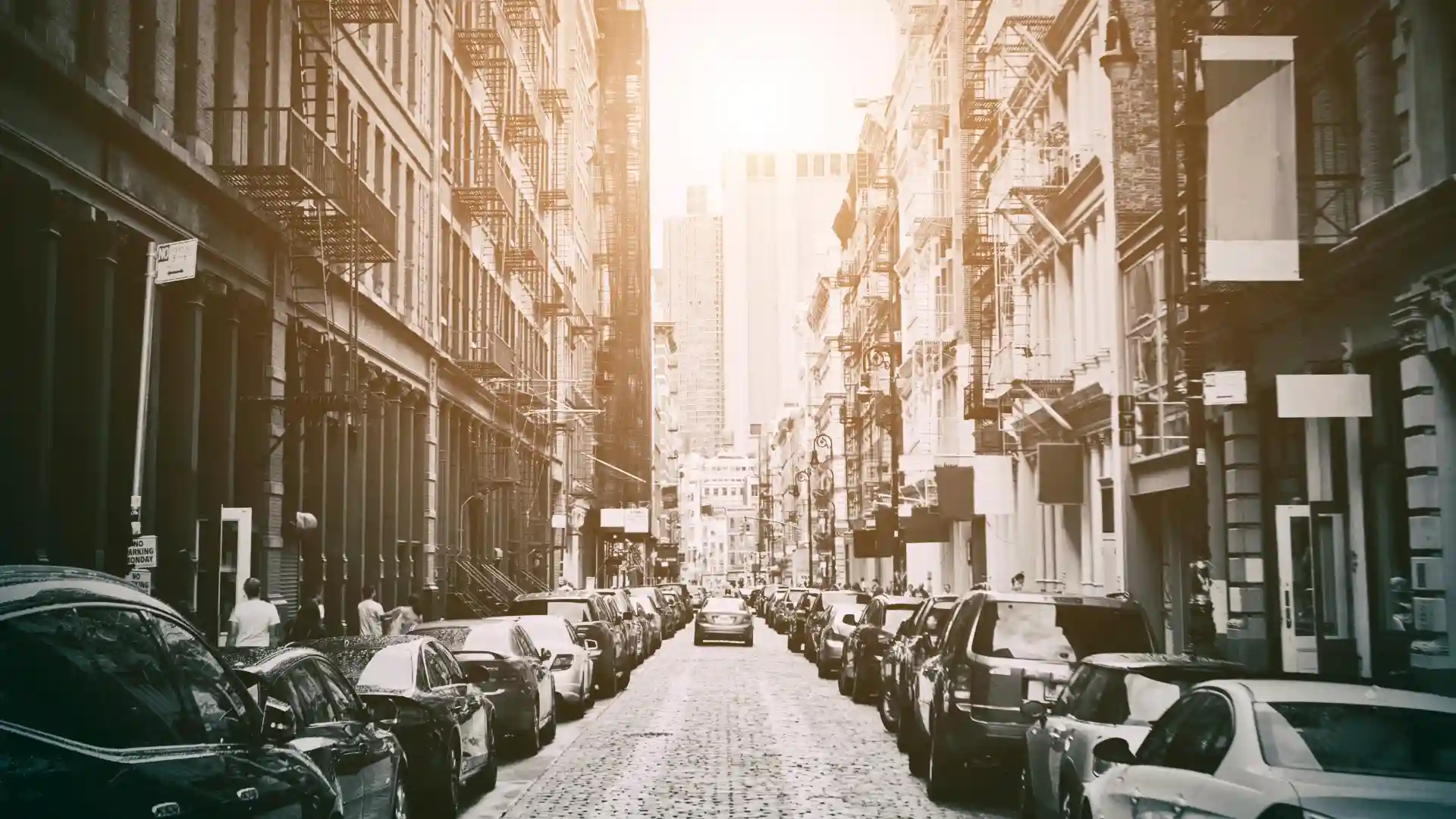

The twilight descends upon MacDougal Street with a certain theatrical grace, casting elongated shadows against the century-old brickwork of the neighborhood. Gas-lit lanterns seem to flicker in the collective memory of these historic sidewalks, illuminating a path trodden by generations of poets, immigrants, and gastronomes. A sharp autumn wind carries the undeniable, deeply comforting scent of simmering veal stock, toasted garlic, and woodsmoke—the eternal perfume of a true culinary sanctuary.
To wander these cobblestones is to turn the delicate pages of a living archive. The modern clamor of Manhattan fades into a distant, muted hum as you cross into this preserved enclave of romance and resilience. Here, beneath the wrought-iron fire escapes and the fading painted brick advertisements of yesteryear, the authentic pulse of Old New York beats with a steady, unyielding rhythm.
This is an expedition for the senses, a deliberate journey mapped out for those who understand that history is best absorbed not just through the eyes, but through the palate. Every weathered stoop and softly illuminated tavern window tells a story of survival, of profound artistry, and of traditions fiercely protected against the passage of time.
Footsteps on Cobblestone: The Soul of MacDougal Street
Our journey begins where the commercial grid surrenders to the idiosyncratic, winding geometry of the Greenwich Village streets. To step onto this particular stretch of asphalt is to enter a profoundly layered landscape, where the architectural ghosts of the nineteenth century stand shoulder to shoulder. The air here feels thicker, heavier with the resonance of countless lives lived intensely within these narrow, Federal-style townhouses.
In the early twentieth century, this neighborhood transformed into a bustling, vibrant crucible of Italian heritage. Pushcarts overflowing with globe artichokes, sharp provolone, and fresh-caught seafood lined the curbs, while the melodic cadence of regional Italian dialects echoed from the fire escapes. It was a time when the butcher, the baker, and the pasta maker formed the foundational pillars of a tightly knit society, entirely self-sufficient and fiercely proud of its provincial roots.
Today, those lingering echoes form the bedrock of any meaningful historic walking tour through the area. As you walk northwards, the facades of the buildings reveal subtle clues to their past: a faded stone cornice here, a meticulously preserved mosaic tile entrance there. These architectural details serve as quiet monuments to the artisans who shaped the physical and cultural geography of the city.
An Epicurean’s Map to Greenwich Village Heritage
True appreciation of this neighborhood requires an understanding of its dual nature: it is simultaneously a cradle of American bohemian culture and a bastion of unwavering immigrant tradition. The juxtaposition is striking, with former speakeasies sharing party walls with venerable family-owned establishments that have weathered decades of social upheaval. This intricate tapestry is formally recognized within the boundaries of the South Village Historic District, a designation that safeguards the unique aesthetic and historical integrity of our immediate surroundings.

As the custodian of this legacy, Villa Mosconi occupies a distinct, foundational space within this narrative. The walls of our dining rooms, rich with the patina of countless celebrated evenings, stand as a testament to an era when dining was a deliberate, unhurried ritual. For those seeking to trace the exact lineage of these interconnected streets and the storied figures who walked them, our comprehensive historical guide to the South Village offers a deeply curated map of the neighborhood’s evolution.
Walking these blocks, one begins to recognize the profound correlation between the preservation of architecture and the preservation of culinary technique. The physical environment demands a certain respect for provenance, a philosophy that rejects the ephemeral in favor of the eternal. The true epicurean understands that a perfectly executed dish is, in itself, a historical artifact, meant to be consumed with reverence.
The Architecture of Appetite: Hidden Courtyards and Townhouses
Midway through our promenade, the visual rhythm of the street shifts, revealing glimpses of hidden, ivy-draped courtyards behind ornate iron gates. These secluded spaces were once the private sanctuaries of the Village’s most illustrious residents, offering a verdant respite from the relentless energy of the surrounding metropolis. They are remnants of a time when the boundaries between indoor domesticity and outdoor communion were gracefully blurred.
It is in the contemplation of these quiet spaces that the appetite is truly awakened. The sensory deprivation of a silent courtyard amplifies the imagination, drawing the mind naturally toward the comforting anticipation of a meticulously prepared meal. The architecture of the Village, with its intimate proportions and warm materials, inherently fosters a desire for conviviality, for the clinking of heavy crystal glasses and the rich timbre of shared conversation.
We hold fast to this architectural and social philosophy, maintaining an environment where the ambiance is as deeply nourishing as the fare. The physical space must honor the dignity of the ingredients, providing a noble stage for the nightly performance of traditional gastronomy. It is a delicate alchemy, balancing the gravitas of history with the vibrant, living energy of a fully engaged dining room.
The Alchemist’s Pantry: Preserving the Emilian-Romagnol Canon
At the very heart of this epicurean journey lies the sacred geometry of the kitchen, a place where time-honored techniques elevate humble ingredients into works of profound significance. Our devotion remains tethered to the majestic Emilian-Romagnol culinary canon, a regional discipline characterized by its unyielding commitment to richness, complexity, and artisanal precision. This is the cuisine of the aristocracy and the peasantry harmonized, demanding absolute mastery over the elements of fire, fat, and flour.
Consider the intricate architecture of our Tortellini in brodo. The dough, rolled paper-thin by knowing hands, encases a delicate, savory heart, submerged in a deeply clarified, golden capon broth that has been coaxed into existence over countless hours. Or reflect upon the legendary Ravioli, those sublime, emerald-hued dumplings of spinach and ricotta, bathed in a browned butter and sage emulsion that whispers of the misty plains of northern Italy.
The crown jewel of this culinary heritage, however, is undoubtedly the classic Veal Milanese. A masterclass in textural contrast, the prime cut of veal is pounded thin, breaded with an exacting mixture of seasoned crumbs, and pan-fried to a shimmering, golden-brown perfection. These are not merely recipes; they are ancient incantations, rigorously protected and faithfully executed to ensure that the memory of our ancestors remains vivid upon the palate.
Shadows in Washington Square Park
As our historic walking tour gently moves away from the immediate culinary epicenters, the grand expanse of Washington Square Park reveals itself through the canopy of ancient elm trees. This iconic public square serves as the northern terminus of the South Village, a grand theatrical backdrop where the chaotic, beautiful diversity of New York is on perpetual display. The air here shifts again, lighter, carrying the distant strumming of an acoustic guitar and the murmur of philosophical debates.
Dominating the visual field is the majestic Washington Square Arch, a monument of Tuckahoe marble that anchors the neighborhood’s bohemian spirit with classical rigidity. To stand beneath its imposing shadow as the evening light turns violet is to feel deeply connected to the continuum of the city. It is a place of reflection, an open-air parlor where the epicurean can pause and digest the profound cultural history absorbed along the route.
The park acts as a perfect counterpoint to the intimate, hushed dining rooms of MacDougal Street. The transition from the grand, public spectacle of the square to the private, romantic embrace of a historic restaurant embodies the quintessential New York experience. It is a delicate dance between the monumental and the deeply personal.
The Eternal Flame of the South Village
The true magic of the South Village does not reside solely in its brickwork or its monuments, but in its profound capacity to remember. The neighborhood is a living vessel, retaining the passions, the struggles, and the exquisite triumphs of those who laid its foundations. An epicurean walking tour is, ultimately, an act of communion with these enduring spirits, a gesture of profound respect for the heritage that continues to shape our cultural landscape.
Within this grand tapestry, Villa Mosconi remains an immovable pillar, a steadfast guardian of the old ways. The memory of our ancestral fires continues to burn brightly, illuminating the culinary pathways laid down by generations of Emilian-Romagnol artisans. We remain fiercely devoted to the artistry of our craft, ensuring that the soul of Old New York is plated with dignity, grace, and an uncompromising dedication to excellence.
To walk these streets, to inhale the complex perfumes of the evening air, and to partake in the historic gastronomy of this enclave is to experience a rare and vanishing privilege. The legacy of the South Village is etched into the very cobblestones, a timeless masterpiece waiting patiently to be discovered, savored, and forever remembered.